

Light at the End of the Tunnel!
What a month it has been so far! If you don't know why, click here for all of the sordid details.
We have good news! We have an official reopening date! (Yes! I will use all the exclamation marks I can find! I scrounged under the couch cushions to find the ones hanging out with my stray stitch markers!)
Saturday October 24, 2026 we will be open for in person sales from 11:00am - 6:00pm!!!
In shop sales only until we get our feet under us. It will take a bit longer for the online shop to reopen. Please be patient with us while we sort everything out.
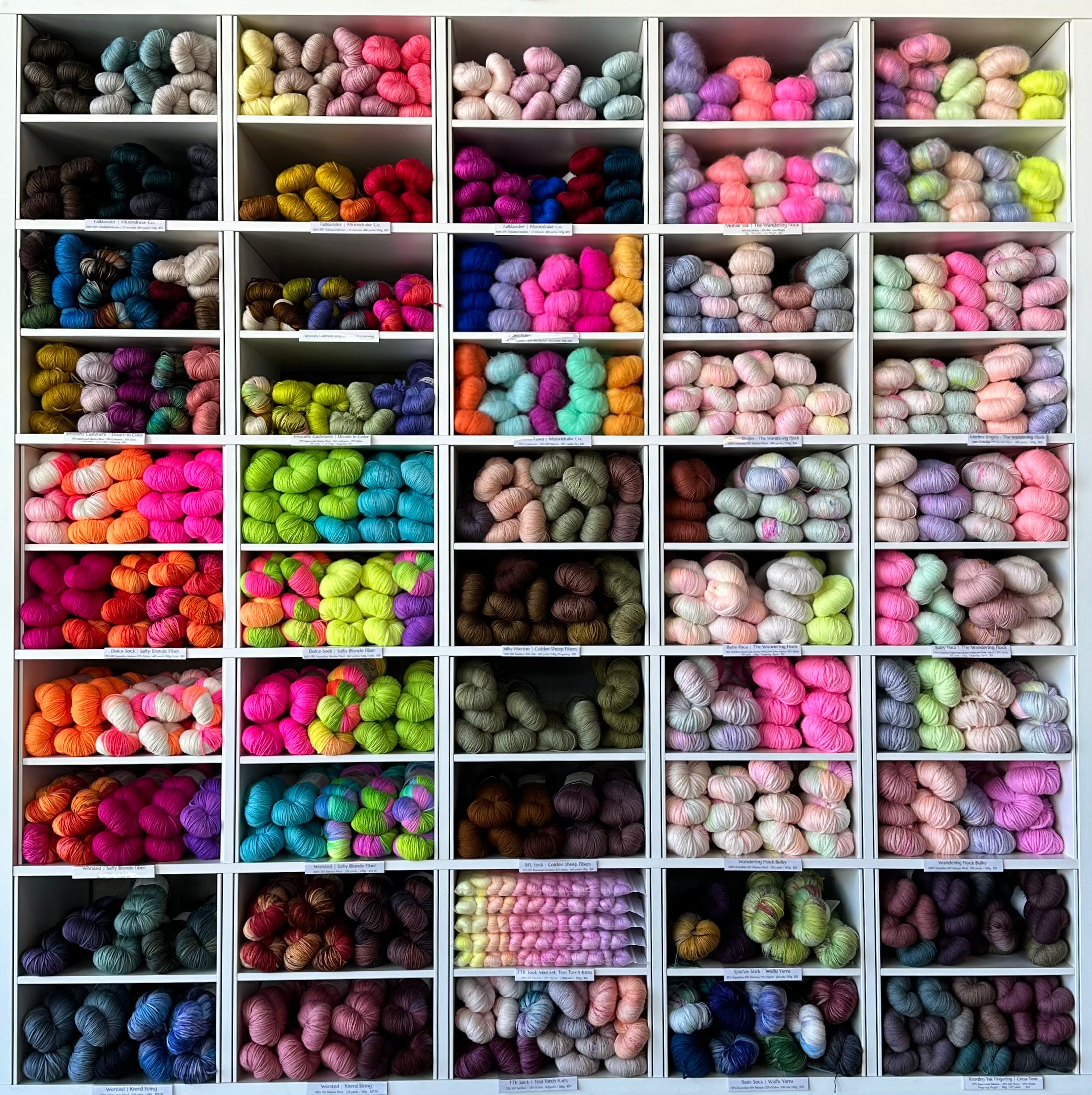
We will return to our usual schedule. We won't have all the yarn we carry available just yet, but we will have a good amount of it with more returning every day. Plus tools and notions and such. The picture is some of the product that is ready to return to our shelves!
Please come out and support us! We have missed you all so much!
If you can't come in person, please consider supporting us by buying a gift card. They never expire and are fully transferrable. You can save them for yourself or give them to the crafty loved ones in your life. We would really appreciate it. The process of shutting down and cleaning up has been quite expensive. No regrets though, it had to be done.
Also, class listing are back up online and available now for sign ups.
Huge, huge thank yous to everyone who helped us get this far:
La Mercerie: We cannot thank the manager, Sam, enough for all of her advice, process suggestions, and product suggestions. She was very kind and generous with her time and advice. Thank you La Mercerie, we appreciate you!!!
Casa Azul Janitorial & Cleaning Services: They took on a big project on a quick turnaround and are doing a great job! They clean homes too.
Burge Pest Control: for helping us evict the uninvited guests.
Team Squirrel: All our staff for pitching in and working far harder than they expected doing work nobody wants to do, and doing it cheerfully. We have the best team and I am immensely grateful for them. I especially want to call out Michelle, Sally, Jean, Genevieve, Laura, Jo, and Emily Jane for going above and beyond. Love you all to bits!!!
And thank you to everyone who sent a note of support in any way. We wouldn't be here without our community and you mean the world to us.
Thank you! Thank you! Thank you!!!!!